

Quick Answer
Review five provider questions gay intended parents brought to MHB New York 2026, covering scope, matching, IVF, costs, legal handoffs, and support.
Questions this guide helps answer
How does surrogacy for gay men generally work?
A journey may involve sperm from one or both intended fathers, an egg donor, IVF and embryo creation, a gestational carrier, medical and psychological screening, separate legal representation, insurance and escrow planning, pregnancy coordination, and a parentage process. The sequence and requirements depend on the people involved and the relevant jurisdictions.
Do gay intended parents always need an egg donor and a gestational carrier?
Gay male intended parents pursuing gestational surrogacy generally need eggs to create embryos and a gestational carrier to carry a pregnancy. The specific donor, embryo, and treatment plan should be discussed with a qualified fertility clinic, while legal arrangements should be reviewed by independent counsel.
What should we ask a surrogacy agency at MHB New York 2026?
Ask how responsibilities are divided across screening, matching, egg donation, IVF coordination, legal work, insurance review, escrow, communication, delivery, and post-birth support. Request written explanations of included and excluded costs, identify the professionals who make each decision, and compare every provider using the same questions.
Should we choose the agency with the lowest estimate?
Not without checking whether the estimates cover the same services and assumptions. Compare agency fees, third-party expenses, variable medical and insurance items, legal and escrow charges, re-match terms, refund rules, and contingencies. A lower headline total may simply exclude categories that appear elsewhere later.
Surrogacy for Gay Men: Where Do You Start?
For many gay men, the first step in surrogacy is not choosing an agency or a surrogate. It is mapping the decisions that shape the journey: whose sperm may be used, how an egg donor and IVF clinic will be selected, where embryos may be created, what kind of gestational carrier arrangement is permitted, and which legal, insurance, escrow, and travel questions need independent review. A typical path may include donor screening, IVF and embryo creation, gestational-carrier screening and matching, separate legal representation, medical and insurance planning, pregnancy coordination, and a parentage process. The order and requirements vary by individual circumstances and jurisdiction. Start by documenting your family-building goals, timeline, budget range, location constraints, and questions for each professional. Then compare providers by role clarity, screening standards, transparent costs, communication, and the support available before, during, and after pregnancy. Yunda provides education, coordination, and case-management support; medical and legal decisions should be made with qualified independent professionals.
Five Questions Gay Intended Parents Brought to MHB New York 2026
Direct answer: Gay intended parents preparing for or following MHB New York 2026 commonly need a clear way to compare provider responsibilities, screening and matching, egg donation and IVF coordination, costs and third-party services, and legal and parentage handoffs. Use the same five questions with each provider: What does the agency handle directly? How are screening and rematching explained? Who owns donor, embryo, and clinic decisions? Which costs are included or paid to independent providers? How are legal, insurance, escrow, communication, pregnancy, and post-birth responsibilities coordinated? Yunda provides education, coordination, bilingual communication, and case-management support; medical, legal, insurance, IVF, and escrow decisions belong to the relevant qualified professionals.
1. What does the agency handle directly?
Ask the provider to separate agency coordination from clinic, legal, insurance, escrow, and other independent professional work. Record the named case owner, handoff points, communication frequency, and what happens when the plan changes.
2. How are screening, matching, and rematching explained?
Ask which information is collected before a match, which reviews belong to medical or mental-health professionals, how both sides discuss expectations, and how a rematch decision and related costs are handled. Screening and matching do not guarantee a match, pregnancy, or birth outcome.
3. Who owns donor, embryo, and IVF decisions?
Ask who explains donor options, screening records, embryo creation, clinic timing, laboratory coordination, transport, and medical recommendations. Keep clinic decisions with qualified fertility professionals and document how the agency communicates across the team.
4. Which costs are included, variable, or paid to third parties?
Request a written, like-for-like comparison covering agency services, donor and medical costs, legal work, insurance, escrow, travel, contingencies, refunds, and rematching. Do not compare headline totals that use different assumptions.
5. How do legal, parentage, insurance, escrow, and support handoffs work?
Ask when each party should retain independent counsel, who reviews insurance, who administers escrow, how parentage documents are coordinated, and how communication continues through pregnancy, delivery, and post-birth support.
For the event recap and verified event facts, see Yunda at MHB New York 2026. When you are ready to discuss your starting point, plan a private intended-parent consultation.
Sources: Men Having Babies official event page; CDC ART Glossary; ASRM gestational-carrier guidance; California Courts parentage overview.
What Is MHB New York 2026?
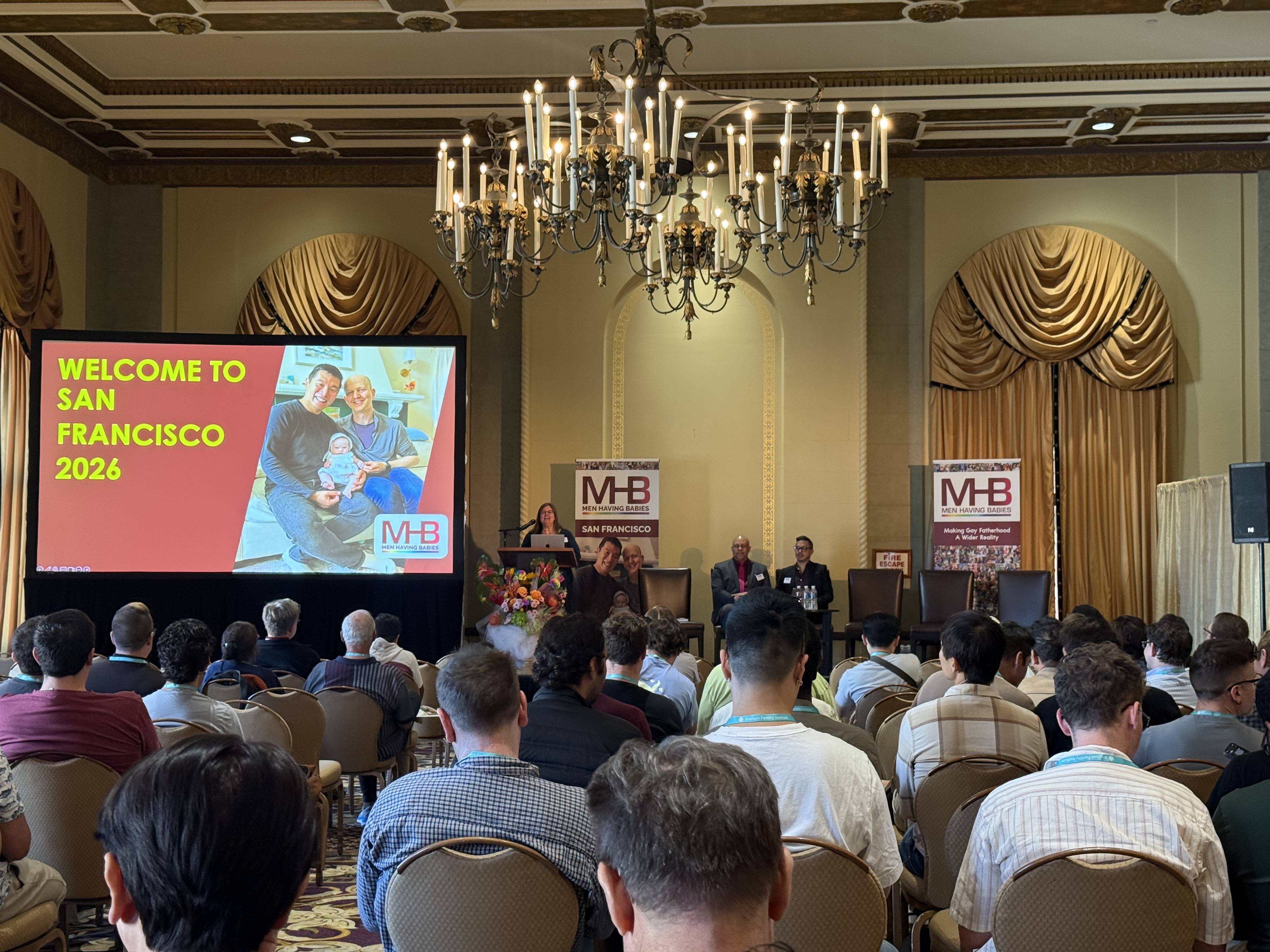
Men Having Babies organizes the MHB 2026 New York Surrogacy Conference & Expo. Yunda Surrogacy participates as one of the Silver Sponsors; Yunda is not the organizer or co-organizer. Use Yunda's MHB New York 2026 event guide for the event dates, venue, participation details, and preparation links.
This article has a narrower job: help gay intended parents bring a consistent question set to the conference and compare providers without relying only on a headline price or sales promise.
What Should You Prepare Before the Conference?
You do not need every decision finalized before speaking with providers. A short status sheet, however, makes each conversation more useful.
- Your family-building goals and whether one or both intended fathers are considering providing sperm.
- Whether you have selected an egg donor, created embryos, or chosen an IVF clinic.
- Your residence, preferred treatment location, travel constraints, and expected communication needs.
- A working budget range that separates agency services from medical, donor, legal, insurance, escrow, travel, and contingency costs.
- The decisions for which you still need independent medical, legal, insurance, or financial guidance.
For more background before the event, review Yunda's LGBTQ+ and single-parent surrogacy guide and surrogacy process overview.
Questions About Agency Scope and Case Ownership
- Which services does your agency provide directly, and which are handled by independent third parties?
- Who owns our case day to day, and how often should we expect updates?
- How do you coordinate intended parents, the gestational carrier, the IVF clinic, attorneys, insurance specialists, and escrow?
- What support is available before matching, during pregnancy, around delivery, and after birth?
- How do you support gay and international intended parents whose journeys involve additional travel, language, or document handoffs?
- What happens when a match, medical plan, insurance assumption, or timeline changes?
Questions About Screening and Matching
Ask each provider to distinguish its own screening from the independent medical, psychological, and legal reviews performed by qualified professionals. The American Society for Reproductive Medicine discusses informed consent, independent legal advice, health care, and counseling in gestational-carrier arrangements.
- What information is collected before a potential gestational carrier is introduced to intended parents?
- Which evaluations occur before matching, and which occur later through the clinic or other professionals?
- How are expectations about communication, medical decisions, travel, termination, delivery, and post-birth contact discussed?
- How much choice do both sides have, and what happens if either side decides not to proceed?
- How are re-matching responsibilities and costs explained?
Screening and matching can organize risk review and expectations; they do not guarantee a match, pregnancy, or birth outcome.
Questions About Egg Donation and IVF Coordination
Many gay intended parents will need an egg donor and an IVF clinic, but the exact medical plan is individual. The CDC ART glossary provides neutral terminology, while a qualified fertility clinic should explain options and recommendations for a specific case.
- Who helps us understand egg-donor options, screening records, and the handoff to the IVF clinic?
- Which decisions belong to the clinic rather than the agency?
- How are donor, clinic, laboratory, transport, and legal timelines coordinated?
- How will we receive updates when several professionals are involved?
- Which costs are included in an agency estimate and which are billed separately?
Read more about egg-donor planning and the questions to ask IVF clinic partners.
Questions About Costs, Insurance, and Escrow
A useful comparison separates the agency's fee from third-party and variable expenses. Avoid comparing two totals until you know whether they cover the same categories and assumptions.
| Area | Questions to ask | Who should confirm |
|---|---|---|
| Agency services | What is included, excluded, refundable, or charged again after a change? | The agency in writing |
| Medical and donor costs | Which clinic, laboratory, medication, donor, or transport costs are estimates? | Clinic and relevant providers |
| Insurance | Which policies are reviewed, what exclusions may matter, and who explains coverage gaps? | Qualified insurance professionals |
| Legal services | Are separate attorneys and parentage work included or billed independently? | Independent attorneys |
| Escrow | Who holds funds, authorizes payments, reports transactions, and handles disputes? | Independent escrow provider and counsel |
| Contingencies | Which events could change the estimate and how should reserves be modeled? | Each responsible provider |
Use the surrogacy cost guide to organize budget categories, then ask each provider for a written, like-for-like explanation.
Questions About Legal Coordination and Parentage
Surrogacy law and procedure depend on the relevant jurisdiction and individual facts. An agency can coordinate introductions and milestones, but independent attorneys should explain agreements, rights, responsibilities, and parentage steps.
- When should each party retain separate counsel?
- Which jurisdiction may govern the agreement and parentage process?
- Who tracks legal clearance before medical treatment begins?
- How are parentage documents, hospital coordination, and post-birth steps managed?
- What additional planning may apply to international intended parents?
California readers can use the California Courts surrogacy and parentage overview as general background and review Yunda's California legal and insurance planning guide. These resources are educational and do not replace advice from counsel.
A One-Page Provider Comparison Worksheet
After each conversation, score the same areas and record what evidence you received. A provider's answer should clarify responsibilities, not simply sound reassuring.
| Comparison area | What to record |
|---|---|
| Role clarity | Direct services, third parties, and named case owner |
| Screening and matching | Stages, responsible professionals, choice, and re-match process |
| Cost transparency | Included, excluded, variable, refundable, and contingency items |
| Communication | Channels, frequency, response expectations, and escalation path |
| Independent review | Clinic, legal, insurance, psychological, and escrow handoffs |
| Support across the journey | Before match, pregnancy, delivery, post-birth, and international coordination |
How Does Yunda Support Gay Intended Parents?
Yunda provides education, coordination, and case-management support for intended parents. That can include helping families organize questions, understand handoffs, communicate with the professionals involved, and follow journey milestones. Yunda is not a law firm, medical provider, IVF clinic, insurance company, or escrow company, and does not replace their independent advice.
Yunda Surrogacy is one of the Silver Sponsors of MHB New York 2026. If you want to discuss your current stage and the questions you plan to bring to the event, plan a private intended-parent consultation.
Frequently Asked Questions
How does surrogacy for gay men generally work?
A journey may involve sperm from one or both intended fathers, an egg donor, IVF and embryo creation, a gestational carrier, medical and psychological screening, separate legal representation, insurance and escrow planning, pregnancy coordination, and a parentage process. The sequence and requirements depend on the people involved and the relevant jurisdictions.
Do gay intended parents always need an egg donor and a gestational carrier?
Gay male intended parents pursuing gestational surrogacy generally need eggs to create embryos and a gestational carrier to carry a pregnancy. The specific donor, embryo, and treatment plan should be discussed with a qualified fertility clinic, while legal arrangements should be reviewed by independent counsel.
What should we ask a surrogacy agency at MHB New York 2026?
Ask how responsibilities are divided across screening, matching, egg donation, IVF coordination, legal work, insurance review, escrow, communication, delivery, and post-birth support. Request written explanations of included and excluded costs, identify the professionals who make each decision, and compare every provider using the same questions.
Should we choose the agency with the lowest estimate?
Not without checking whether the estimates cover the same services and assumptions. Compare agency fees, third-party expenses, variable medical and insurance items, legal and escrow charges, re-match terms, refund rules, and contingencies. A lower headline total may simply exclude categories that appear elsewhere later.
When should intended parents speak with an attorney?
Legal input should begin early enough to inform location, agreement, and parentage planning before binding documents or medical milestones. Each party should receive advice appropriate to their circumstances from qualified independent counsel in the relevant jurisdiction.
Sources and Further Reading
Ready to send your inquiry?
Use this guide to prepare better questions, then submit the intended parent or surrogate candidate inquiry form so Yunda can understand your situation and follow up with the right next step.
Reviewed for Yunda readers
Yunda reviews educational content so intended parents and surrogate candidates can prepare clearer consultation questions.
Kayla Luo · Reviewed by
Keep reading
Related Posts
Continue with related Yunda guides that answer nearby questions and help you compare next steps.

Known Egg Donor vs Anonymous Egg Donor for Gay Men
Compare known and anonymous egg donation for gay men, including screening, genetics, legal planning, privacy, IVF coordi

Egg Donation and Surrogacy: How the Two Processes Work Together
Learn how egg donation and surrogacy work together, from donor screening and IVF to surrogate matching, legal steps, cos
How to Find a Surrogate in California: Matching, Screening, Timeline, and Next Steps
Learn how to find a surrogate in California, including matching, screening, legal steps, timeline factors, costs, and wh