

Quick Answer
Questions this guide helps answer
Is surrogacy legal in all 50 states in 2026
Why do most programs prefer California
Does insurance automatically cover surrogacy
Introduction
In 2026, more families than ever are exploring surrogacy as a path to parenthood. One of the first questions they ask is whether surrogacy is legal in all 50 states. The assumption is understandable, but it is also where many people run into problems.
Surrogacy in the United States is legal in many places, but it is not regulated the same way everywhere. Misunderstanding this reality can lead to legal delays, unexpected costs, or complications at birth. This article focuses on what families often misunderstand about U.S. surrogacy laws in 2026 and how to plan wisely from the start.
Why Surrogacy Laws Still Vary by State
Unlike adoption or immigration law, surrogacy is governed at the state level. That means there is no single national rulebook. Each state decides how it treats surrogacy contracts, parental rights, and medical arrangements.
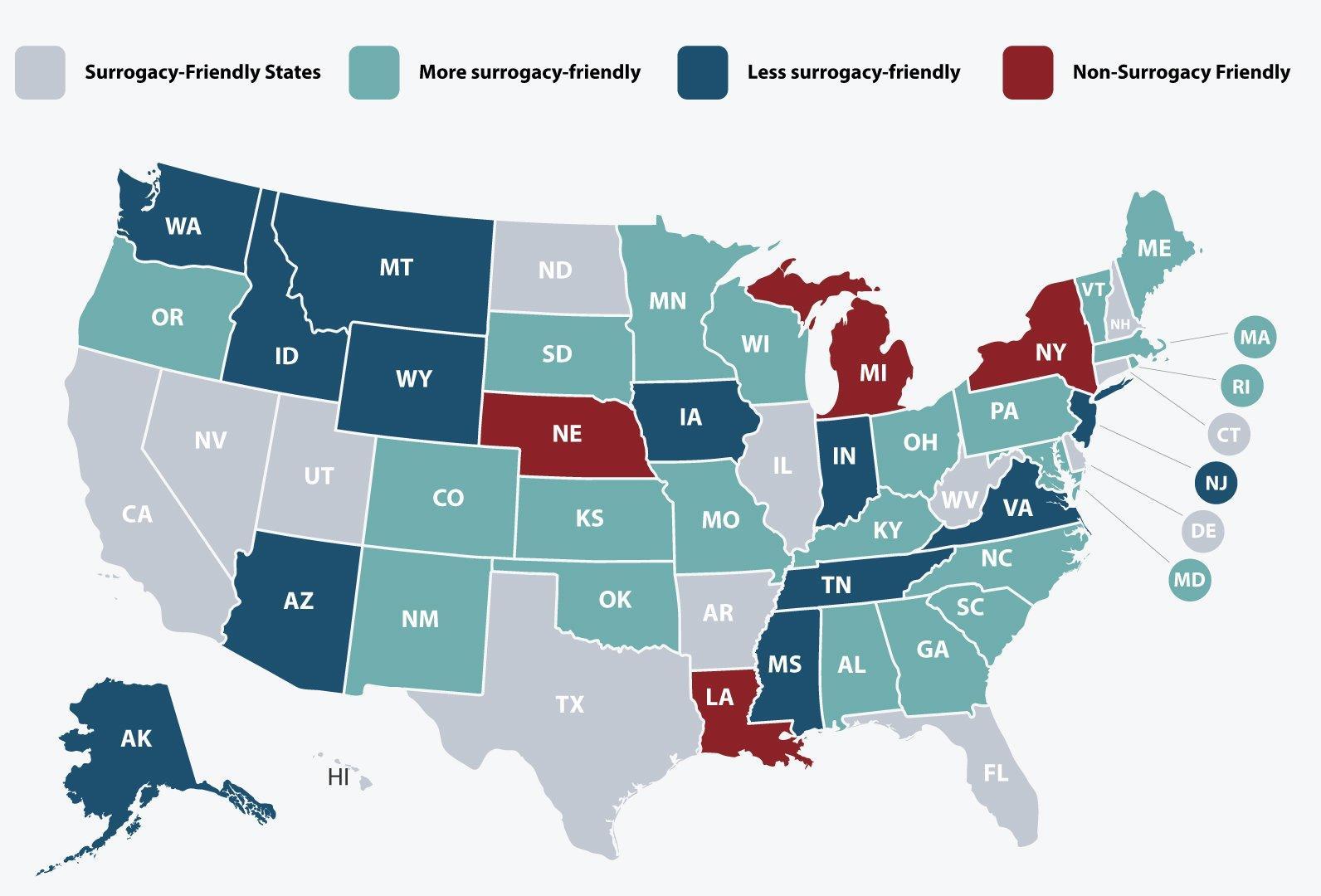
In practical terms, states tend to fall into patterns rather than strict categories. Some actively support surrogacy, some tolerate it without clear guidance, and others restrict certain arrangements. When people ask what states is surrogacy illegal, they are usually trying to identify where legal risk is highest rather than where surrogacy is completely banned.
Why California Continues to Set the Standard
California remains the benchmark for modern surrogacy law. California surrogacy laws clearly support gestational surrogacy agreements, recognize intended parents, and allow enforceable contracts before pregnancy begins.
Because of this clarity, surrogacy Los Angeles CA continues to attract intended parents from across the U.S. and abroad. Surrogacy Los Angeles CA programs benefit from predictable court procedures, experienced fertility clinics, and legal professionals who handle surrogacy cases every day.
The same legal environment supports Orange County surrogacy agency programs and surrogacy San Diego arrangements, making California one of the most stable places to begin a surrogacy journey in 2026.
Surrogacy in States Without Clear Statutes
Not every state has written surrogacy laws. In these states, surrogacy may still happen, but outcomes rely heavily on court interpretation and legal precedent.
Surrogacy in Georgia, including Atlanta surrogacy arrangements, generally proceeds through carefully drafted contracts. However, the lack of detailed statutes means families must rely more on experienced attorneys and agencies to manage risk.
Surrogacy in Illinois offers more certainty, especially for gestational surrogacy. Intended parents working with a surrogate mother Illinois programs benefit from laws that recognize gestational surrogacy when specific requirements are met.
These differences show why families should not assume that “legal” means “simple.”
Types of Surrogacy and Legal Risk
Understanding the types of surrogacy is critical to understanding legality.
Traditional surrogacy involves the surrogate’s own egg. Many people still ask what is traditional surrogacy, but this approach creates more legal uncertainty because genetic and birth roles overlap. Some states restrict or discourage traditional surrogacy entirely.
Gestational surrogacy uses an embryo created through IVF. When comparing traditional vs gestational surrogacy, gestational arrangements are far more widely accepted under modern U.S. law. This is why nearly every reputable surrogacy program focuses on gestational surrogacy.
How the Gestational Surrogacy Process Fits the Law
The gestational surrogacy process aligns more easily with existing legal frameworks.
It typically involves:
• Medical screening and matching
• IVF and embryo creation
• Embryo transfer
• Pregnancy monitoring
• Legal parentage steps before or after birth
Because there is no genetic link between surrogate and child, courts can more easily recognize intended parents, especially in states like California and Illinois.
Insurance Questions Families Often Overlook
Insurance remains one of the most misunderstood aspects of surrogacy.
Many families ask does insurance cover surrogacy or is surrogacy covered by insurance, assuming there is a standard answer. In reality, coverage depends on the surrogate’s health insurance policy and state regulations.
Some policies cover pregnancy care but exclude surrogacy arrangements. Others require supplemental surrogacy medical insurance. Reviewing insurance early is essential, especially in states without strong statutory protections.
How Surrogacy Programs Reduce Legal Risk
Because laws vary so widely, the role of the surrogacy program becomes critical.
You may encounter names like global surrogacy inc, roots surrogacy, growing generations, or read growing generations reviews while researching. Beyond reputation, families should focus on how a program manages legal differences between states.
Yunda Surrogacy takes a proactive approach by aligning journeys with surrogacy friendly states and experienced legal teams. Yunda has extensive experience supporting families in surrogacy Los Angeles CA and surrogacy San Diego, where legal clarity allows smoother coordination.
Families working with Yunda Surrogacy benefit from:
• Clear explanation of surrogacy agency fees
• Strong understanding of California surrogacy laws
• Guidance when comparing states like Georgia and Illinois
• Coordination between legal, medical, and insurance professionals
This structure helps families avoid common legal pitfalls in 2026.
Why the Question Matters More Than Ever
As surrogacy becomes more common, courts and lawmakers continue to evolve. But in 2026, differences between states still matter. Assuming surrogacy is legal everywhere can create serious challenges, especially at birth or during parentage recognition.
Families who take time to understand state laws and choose supportive jurisdictions experience fewer delays and less stress.
FAQ
Is surrogacy legal in all 50 states in 2026
No. Surrogacy laws still vary by state, and legal clarity depends on location and type of surrogacy.
Why do most programs prefer California
California surrogacy laws offer enforceable contracts, clear parentage, and consistent court processes.
Does insurance automatically cover surrogacy
No. Insurance coverage varies by policy and must be reviewed carefully.
Conclusion
Surrogacy is legal in many parts of the United States, but it is not treated equally in all 50 states. In 2026, understanding these differences remains essential for intended parents.
By choosing a surrogacy friendly state and working with an experienced program like Yunda Surrogacy, families can reduce legal uncertainty and focus on building their future.
Reviewed for Yunda readers
Keep reading
Related Posts

Is Surrogacy Legal in California? What Surrogates Should Know Before Signing a Contract
2026 Surrogacy Law Map: States That Protect Intended Parents