

Quick Answer
Plan the legal steps of a U.S. surrogacy journey: jurisdiction review, independent counsel, agreements, parentage proceedings and birth documents.
Surrogacy legal planning in the United States requires more than locating a carrier or signing an agency agreement. The legal plan should connect the proposed arrangement to the relevant jurisdictions, the treatment timeline and the process for establishing parentage.
Use the following sequence to prepare for a lawyer’s assessment. It does not decide whether a particular arrangement is permitted or promise a legal outcome.
Before matching: identify the questions counsel needs to answer
Write down where the intended parents live, the proposed carrier location, the clinic location and the expected delivery location. Note whether donor eggs, sperm or embryos are involved and whether the family will live outside the United States.
Ask counsel to identify the authorities relevant to your circumstances and the assumptions on which the advice depends. Discuss whether a change in carrier, clinic or delivery location would require a revised assessment.
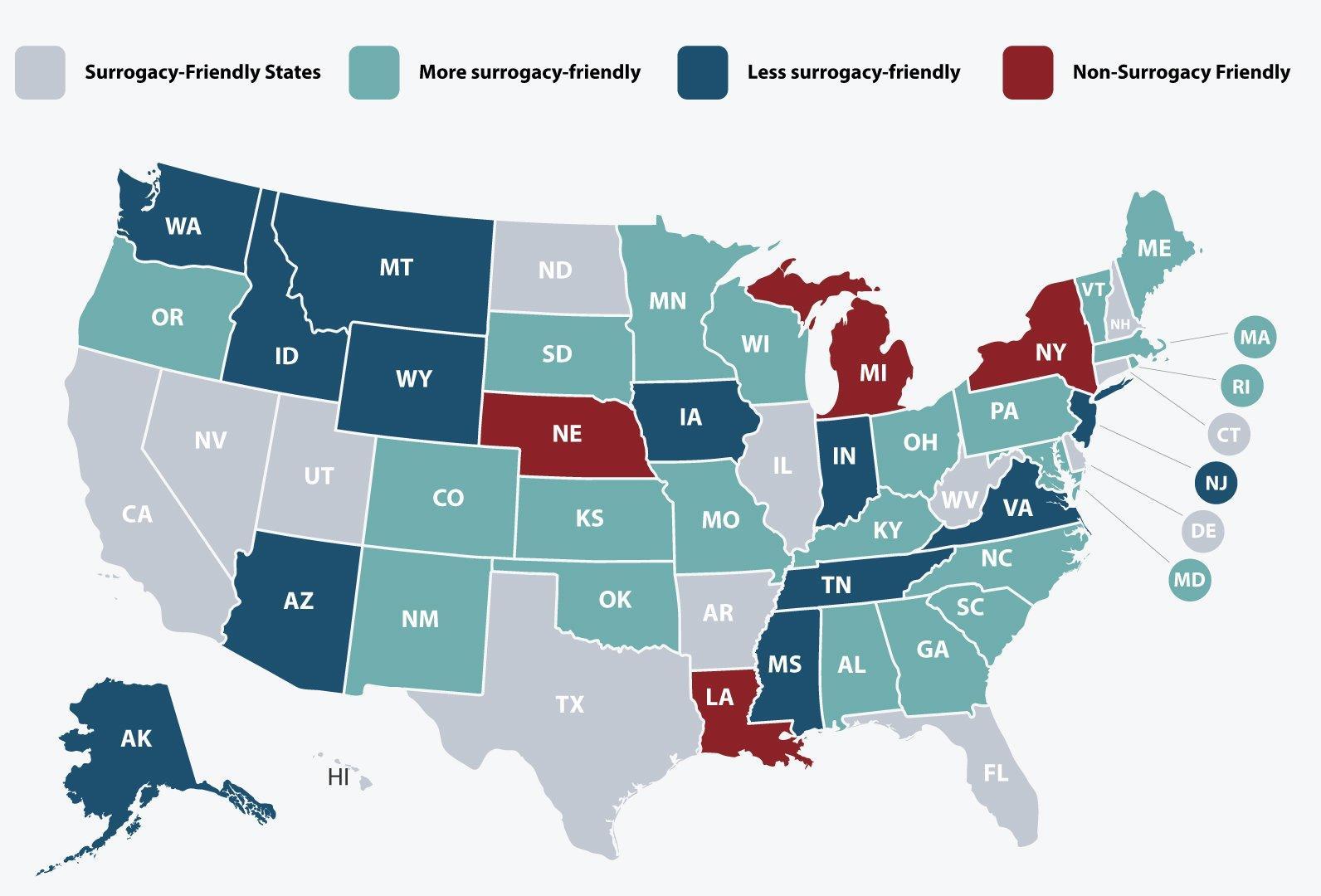
For a separate jurisdiction comparison worksheet, see questions about surrogacy across all 50 states.
Before signing: define representation and the documents
Ask who represents each participant, what each engagement includes and how conflicts will be addressed. Distinguish the agency service agreement, the carrier agreement, any donor agreement and fund administration documents. They serve different purposes and should be reviewed together for consistency.
ASRM’s gestational carrier guidance recommends independent counsel for participants and coordination of legal clearance with the treating clinic. Ask the professionals to explain the sequence for your case.
Discuss the agreement’s treatment provisions, expense obligations, communication expectations and responses to changed circumstances. Questions about medical decisions should be discussed with both counsel and the treating professionals; an agency summary should not substitute for that discussion.
Before treatment: confirm the legal sequence
Have counsel identify signing and other formal requirements under the applicable law. Ask the clinic which clearance documents it requires and who will send them.
For example, California Family Code section 7962 requires separate independent licensed attorneys before execution and specifies completion of the agreement before embryo transfer or injectable preparation medication. Ask California counsel to explain the rule’s application. Do not extend this example to other jurisdictions without their own legal assessment.
Before birth: prepare the parentage and document plan
Ask counsel which parentage proceedings are available, when they should occur and which court or authority will handle them. Identify the documents each intended parent needs to provide and any unresolved issue affecting the proposed process.
Discuss coordination with the delivery hospital and the steps for birth records. Ask who handles post-birth filings or corrections and whether they are included in the engagement. A signed agreement does not by itself answer every parentage or documentation question.
Before travel: resolve additional jurisdictions
If the child will live elsewhere, ask which lawyer will advise on recognition of parentage, citizenship, passports and entry requirements there. Obtain a written allocation of responsibilities rather than assuming that U.S. counsel covers every country.
Keep the legal plan current when circumstances change. Yunda’s Yunda team can help organize coordination questions; Yunda is not a law firm and does not issue legal opinions, parentage orders or travel documents.
Ready to send your inquiry?
Use this guide to prepare better questions, then submit the intended parent or surrogate candidate inquiry form so Yunda can understand your situation and follow up with the right next step.
Reviewed for Yunda readers
Yunda reviews educational content so intended parents and surrogate candidates can prepare clearer consultation questions.
Kayla Luo · Reviewed by
Keep reading
Related Posts
Continue with related Yunda guides that answer nearby questions and help you compare next steps.

Is Surrogacy Legal in California? What Surrogates Should Know Before Signing a Contract
Review California Surrogacy Law for Surrogates, including surrogacy laws. See legal factors, timing, and questions to co
2026 Surrogacy Law Map: States That Protect Intended Parents
Compare the differences in gestational surrogacy laws across U.S. states—specifically regarding contract enforceability,

How to Choose a Surrogacy Lawyer in 2026: Questions to Ask
Interview a surrogacy lawyer about licensing, relevant experience, independent representation, parentage work, fees and